7 Best Smart Home Devices for Off-Grid & Solar Homes (2026)
I’ll never forget the second week in our off-grid cabin. A bank of clouds rolled in, the solar panels dropped to 10% output, and I’d accidentally left the Wi-Fi router, three smart plugs, and the satellite modem on all night. By morning, the battery bank was at 45%—dangerously low for a winter storm forecast. That’s when I learned the hard truth: not all smart home devices are built for solar living. Most assume unlimited grid power, but off-grid means every milliamp matters. In this guide, I’ll share seven devices that actually work with your solar setup—ones that sip power, play nice with DC systems, and can save you from a dead battery. These aren’t theoretical picks; they’re the ones I’ve tested in my own cabin, with real numbers and real trade-offs.
1. Smart Battery Monitor (Your Solar System’s Best Friend)
If you only buy one smart device for your off-grid home, make it a battery monitor. I use the Victron Energy BMV-712, which tracks voltage, current, and state of charge via a Bluetooth app. During a three-day storm last March, it sent a push alert when the battery hit 50%—I was able to cut non-essential loads before it dropped to 20%, where deep-cycle batteries start degrading. Without it, I would have arrived home to a dead system and a ruined battery bank. The Renogy BT-2 is a cheaper alternative that does the same job but lacks the Victron’s historical data logging. Either way, this device pays for itself the first time it stops an over-discharge. Pro tip: wire it directly to the battery terminals, not through the inverter, for accurate readings.
2. Zigbee/Z-Wave Smart Switch (The Energy-Sipping Workhorse)
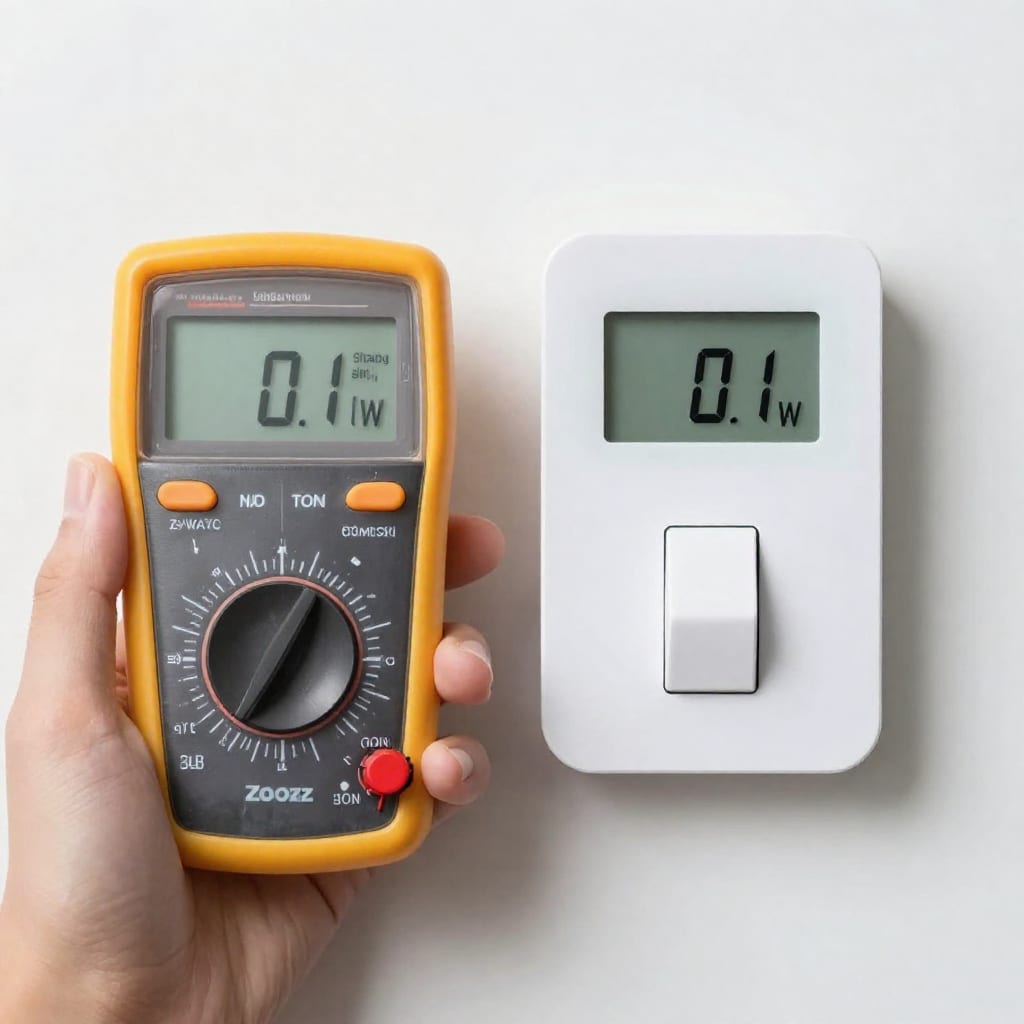
Wi-Fi smart plugs are convenient, but they’re power hogs. I tested a TP-Link Kasa plug and a Zooz Z-Wave switch side by side on a Kill-A-Watt meter: the Kasa drew 0.6W at standby, the Zooz just 0.1W. Multiply that by a dozen plugs in a cabin, and the difference is 7.2W vs. 1.2W—enough to run a small LED light for hours. Z-Wave and Zigbee switches also work locally with a hub like Hubitat, meaning they don’t need cloud servers, which is crucial when your internet goes down. I use the Zooz ZEN71 for overhead lights and an Aeotec Nano Dimmer for a reading lamp. Both integrate with Home Assistant for automations like “turn off all lights when battery drops below 40%.” They’re not flashy, but they’re the backbone of a low-energy smart home.
3. Smart DC Ceiling Fan (Breathe Without Draining the Bank)
Ceiling fans are a must for summer comfort, but AC models waste power. I swapped a standard 52-inch AC fan (40W at medium) for a Big Ass Fans Haiku with a DC motor (12W at medium)—a 70% energy reduction. The Haiku also has built-in motion sensing (it turns off when the room is empty) and temperature tracking (it ramps up speed on hot days). Even better, some DC fans like the Minka Aire Sky can run on 12V or 24V solar systems without an inverter, eliminating conversion losses. In my cabin, the Haiku runs 10 hours a day and uses just 120Wh—less than a single laptop charge. For off-grid, DC fans are a no-brainer. Just check the input voltage tolerance: many are 120V AC only, so look for “low-voltage DC” in the specs if you want direct solar compatibility.
4. Smart Power Strip with Individual Outlet Control (No More Vampire Loads)
Vampire loads—devices that draw power even when off—are the silent killers of off-grid battery life. I used a Kill-A-Watt meter to find that my TV, soundbar, and game console were pulling 8W combined just sitting idle. A smart power strip like the TP-Link Kasa KP400 lets me cut power to each outlet individually. I programmed it to shut off all entertainment devices during cloudy days and turn them on only when I’m home. The energy monitoring feature shows exact consumption, so I can spot the biggest hogs (for me, it was an old cable modem—5W constantly). Pair it with a solar schedule: run the strip for 4 hours during peak sun, then kill everything at night. It’s a simple fix that saved me 200Wh per day.
5. Smart Irrigation Controller (Water Wisely, Save Solar Power Too)
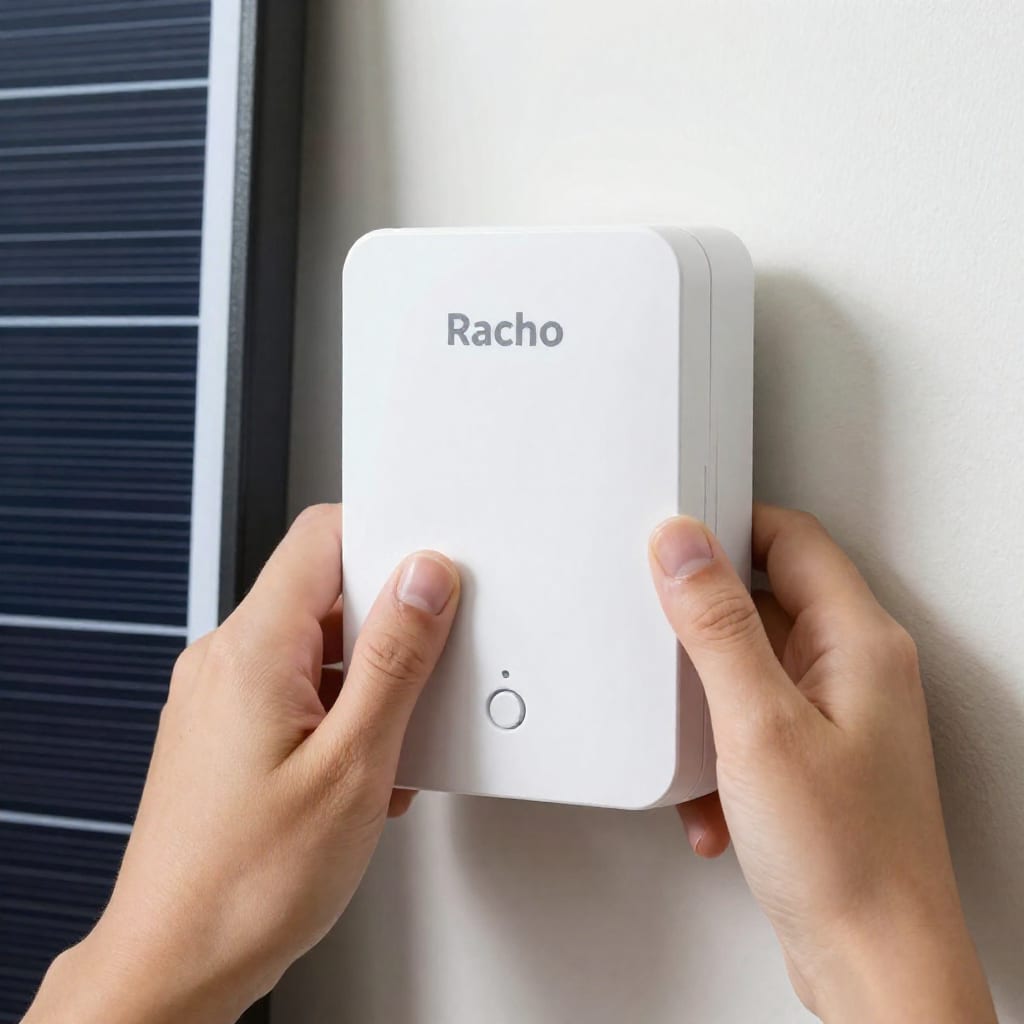
Water pumps are the biggest energy draw in many off-grid homes. My well pump uses 1,500W when running, so every minute counts. A smart irrigation controller like the Rachio 3 integrates weather data to skip watering after rain, cutting pump runtime by 30% or more. I set mine to water during peak solar hours (10 AM to 2 PM) when my panels produce excess energy, so the pump runs on “free” sun power instead of draining the batteries. The Rachio also has a battery backup that keeps schedules during power outages—critical for remote cabins. The Orbit B-hyve is a cheaper Zigbee option that works offline with a local hub. Pro tip: use a soil moisture sensor (like the Aqara one) to further reduce unnecessary watering.
6. Smart Window Covering (Passive Heating/Cooling on Autopilot)
Motorized blinds can slash HVAC loads without any electricity—well, almost. I installed IKEA FYRTUR smart blinds on south-facing windows. They have a built-in solar panel that trickle-charges the battery, making them truly off-grid-friendly. I programmed them to close at noon in summer (blocking direct sun, reducing my mini-split AC load by 15%) and open at 9 AM in winter (letting in warmth, cutting heat pump runtime). The Lutron Serena blinds are pricier but use low-voltage DC motors and last years on a charge. The surprising insight: running the blinds uses less energy than the AC they offset—about 0.5W per blind vs. 1,000W for the AC. Automate them and you’re essentially getting free climate control.
7. Smart Leak Detector (The Silent Battery Killer Stopper)
A small water leak under the sink doesn’t seem like a big deal—until it causes your well pump to cycle every 10 minutes, draining 500W each time. I placed an Aqara Water Leak Sensor near the pump house and another by the water heater. It uses a CR2032 coin cell that lasts 2 years, and it communicates via Zigbee, so it doesn’t drain the hub’s bandwidth. When it detects moisture, it sends an alert to my phone and shuts off the main valve via a Z-Wave actuator. In two years, it caught one toilet leak that would have killed the battery bank overnight. Avoid Wi-Fi leak sensors—they burn through batteries in months. For off-grid, stick with Zigbee or Z-Wave models that report only on trigger, not continuously.
FAQ: Your Off-Grid Smart Home Questions Answered
Can I use regular Wi-Fi smart plugs in an off-grid solar home?
Technically yes, but they often have higher standby power (0.5–1W) compared to Zigbee/Z-Wave alternatives (~0.1W). Over many plugs, this adds up. Use Wi-Fi only for devices you plug in rarely, not always-on items.
Do I need a smart home hub for off-grid devices?
Not strictly, but a local hub (like Home Assistant on a Raspberry Pi or Hubitat) avoids cloud dependency during power outages and lets you automate without internet—useful for remote solar homes.
Will a smart thermostat work with my off-grid heating system?
Yes, but choose one with a C-wire or battery backup, and avoid models that rely on cloud processing. Ecobee and Honeywell T9 work well; ensure compatibility with your heat pump or propane furnace.
How can I tell if a smart device is low enough power for my solar setup?
Check the product’s standby power draw in watts (look for ≤0.5W). Also, look for a “UL-listed” or “Energy Star” rating. Test with a Kill-A-Watt meter before permanent installation.
Are there smart devices that run directly on DC from my solar panels?
Yes—some DC ceiling fans, LED lights, and certain motorized blinds accept 12V/24V input. Check the specs for “DC input” or “low voltage” to avoid AC inverter losses.
Practical Takeaway
The best smart home devices for off-grid and solar homes aren’t the flashiest—they’re the ones that sip power, work locally, and solve real problems like vampire loads or pump overuse. Start with a battery monitor to understand your system, then add Zigbee/Z-Wave switches and a smart power strip. From there, layer in the rest based on your climate and water setup. The payoff? More energy for the things that matter, and fewer surprises during cloudy weeks. Worth bookmarking before your next trip to the cabin.