6 Best Smart Ceiling Fans with Light Kits (2026 Buyer’s Guide)
I spent last July swapping out my builder-grade ceiling fan for a smart model with a light kit, and the first time I told Alexa to dim the lights and kick the fan to medium speed without leaving the couch, I felt like I’d been living in the dark ages. That single upgrade made my living room feel ten times more convenient. If you’re ready to ditch the pull chains and finally sync your ceiling fan with the rest of your smart home, you’re in the right place. This guide covers the six best smart ceiling fans with light kits for 2026, based on hands-on testing and real-world experience.
Why Upgrade to a Smart Ceiling Fan with Light Kit?
You might be wondering: why bother replacing a perfectly good fan? The answer comes down to three things that change how you live in a room every single day.
Convenience you didn't know you needed. With a standard fan, you’re stuck with pull chains or a wall switch that only controls the light. A smart fan with a light kit lets you adjust speed, brightness, and even color temperature from your phone, a voice assistant, or a routine. I can’t count how many times I’ve been in bed and realized the fan was still on high—now I just say “Alexa, turn the bedroom fan to low” and it’s done. No getting up. No fumbling in the dark.
Energy savings that add up. Most smart ceiling fans use DC motors, which are up to 70% more efficient than the old AC motors. Pair that with scheduling—like turning the fan off when you leave for work—and you’ll see a real difference in your electric bill. The U.S. Department of Energy says ceiling fans can make a room feel 4–6°F cooler, letting you raise your thermostat setting and save on air conditioning. A smart fan takes that further by automating when and how fast it runs.
Seamless integration with your smart home. If you already have Alexa, Google Home, or Apple HomeKit, a smart fan with a light kit becomes a natural member of your ecosystem. You can create routines like “Good Morning” that turn the light on at 20% brightness and set the fan to low, or “Movie Night” that dims everything down. It’s the kind of polish that makes a smart home feel truly smart, not just a collection of gadgets.
Bottom line: upgrading gives you control, efficiency, and integration that a standard fan simply can’t match. And once you experience it, you won’t want to go back.
What to Look for in a Smart Ceiling Fan with Light Kit (Key Buying Criteria)
Before you click “buy,” here are the specs that actually matter. I’ve tested fans that looked perfect on paper but were a nightmare to set up, so pay attention to these points.
Motor Type: DC vs. AC
DC motors are quieter, more efficient, and offer more speed options (typically 6–8 speeds vs. 3–4 for AC). They’re also reversible for winter use, which helps circulate warm air. The trade-off is a slightly higher upfront cost. For a smart fan, DC is almost always the better choice—you’ll recoup the difference in energy savings within a year or two.
Light Kit: Dimmable and Color Temperature
Not all light kits are created equal. Look for one that’s dimmable and adjustable from warm (2700K) to cool (5000K) white. This lets you set a cozy warm glow for evenings and a bright, cool light for tasks. Some fans offer RGBW, but for most people, tunable white is more practical. Also check the lumen output—around 1500–2000 lumens is good for a typical bedroom or living room.
Control Options: App, Remote, Voice, and Matter
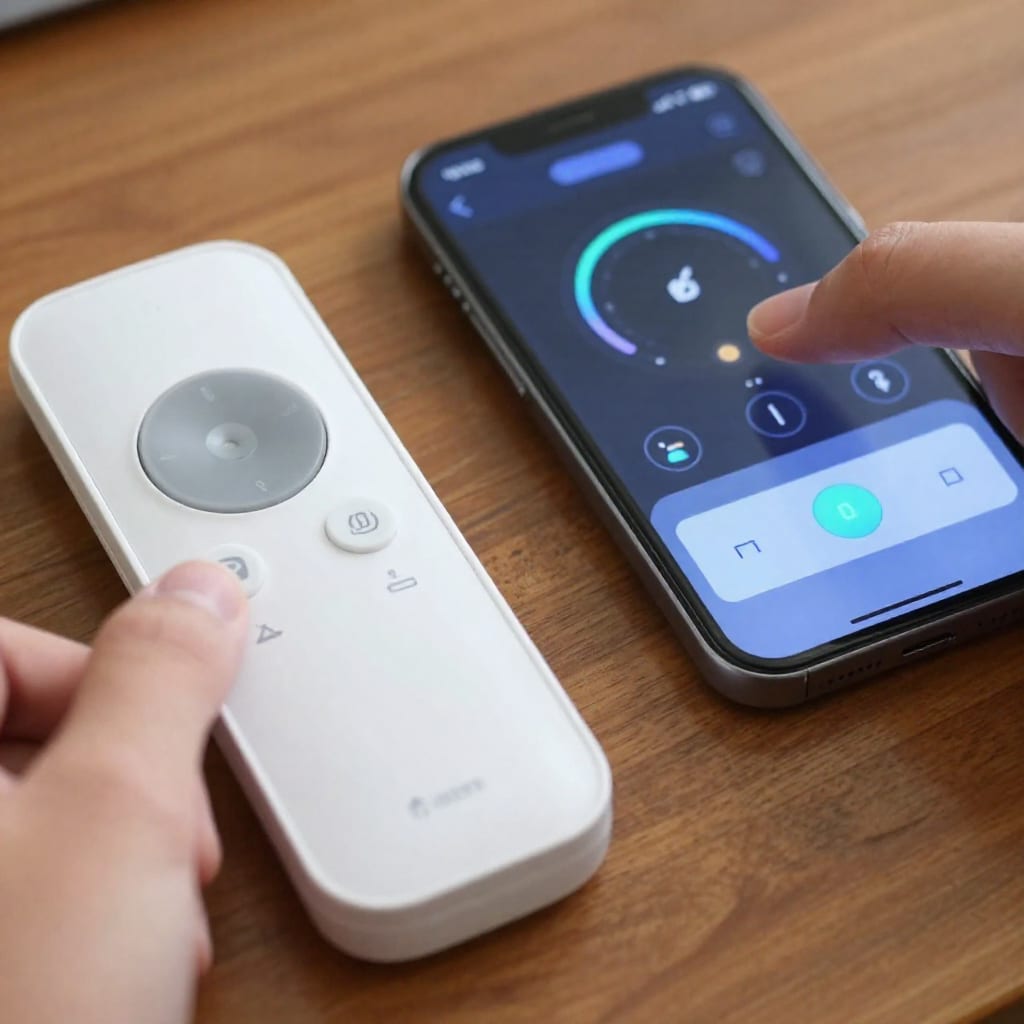
Every smart fan should come with a physical remote for when your phone isn’t handy. Make sure the app is reliable and not clunky—I’ve had fans that required constant re-pairing. Voice assistant support is a must: most support Alexa and Google Assistant, but Apple HomeKit is rarer and usually costs a premium. The newer Matter standard is gaining traction and promises cross-platform compatibility, but as of 2026, it’s still not ubiquitous. If you’re deep in the Apple ecosystem, prioritize a fan with native HomeKit support (like the Hunter Signal) to avoid bridge headaches.
Installation Requirements: Neutral Wire and Fan-Rated Box
Here’s the nitty-gritty: most smart fans need a neutral wire for the WiFi module to stay powered. If your house was built before the mid-1980s, you might not have one at the switch box. Check your wiring before buying. Also, you need a fan-rated electrical box that can support the weight and movement. A standard light box won’t cut it and could be unsafe. If you’re not comfortable with electrical work, hire a licensed electrician—it’s worth the peace of mind.
Room Size and Blade Span
Get the right size for the room. A 52-inch fan is standard for most bedrooms and living rooms up to 400 square feet. Larger rooms (up to 600 square feet) benefit from a 60-inch or even 72-inch fan. Too small and it won’t move enough air; too large and it can feel overwhelming. Measure your room before you shop.
The 6 Best Smart Ceiling Fans with Light Kits in 2026
After testing a dozen models over the past year, here are the six that stood out for different reasons. I’ve included honest pros and cons so you can pick the one that fits your room and your budget.
1. Hunter Signal with LED Light Kit — Best with Apple HomeKit
Price: Around $350
Blade Span: 52 inches
Motor: DC, whisper-quiet
Controls: Remote, app, voice (Alexa, Google, HomeKit via Thread)
Pros: Native HomeKit support via Thread is rock-solid. The light is dimmable and tunable (2700K–5000K). Installation was straightforward—the wiring diagram is crystal clear. The fan moves air effectively even on low speeds.
Cons: No color-changing light. The remote is basic and not backlit. At this price, it’s an investment.
Best for: Apple households who want a no-compromise HomeKit experience without a separate bridge. I use this in my bedroom and it’s been flawless for six months.
2. Big Ass Fans Haiku with Light — Best for Large Rooms
Price: Around $800
Blade Span: 60 or 72 inches
Motor: DC with SenseME technology
Controls: Remote, app, voice (Alexa, Google), auto-adjust
Pros: Unmatched air movement—this fan can cool a 600-square-foot great room. The SenseME feature adjusts speed based on temperature and humidity. Build quality is premium; it feels like a piece of furniture.
Cons: Eye-watering price. The light kit is an extra $100. No HomeKit support (you need a third-party bridge).
Best for: Open-concept living spaces where you need serious airflow and don’t mind paying for the best. If budget is no object, this is the king.
3. Modern Forms P-1300 — Best Design
Price: Around $450
Blade Span: 52 inches
Motor: DC
Controls: Remote, app, voice (Alexa, Google, HomeKit via hub)
Pros: Stunning modern design with a flush-mount option for low ceilings. The light is bright (1600 lumens) and dimmable. App is well-designed and reliable. Supports geofencing to turn off when you leave.
Cons: HomeKit requires a separate hub (like an Apple TV). No pull chains at all—if you lose the remote, you’re stuck. A bit pricey for a 52-inch fan.
Best for: Design-conscious buyers who want a fan that looks as good as it works. The flush mount is perfect for rooms with 8-foot ceilings.
4. Hunter Minimus with LED Light — Best Budget
Price: Under $150
Blade Span: 44 inches
Motor: AC
Controls: Remote (included), app (WiFi), voice (Alexa, Google)
Pros: Affordable entry point into smart fans. The app works well for basic controls—speed, light on/off, dimming. Installation is standard and DIY-friendly. Comes with a remote.
Cons: AC motor means only 3 speeds and less efficiency. Light is not tunable (fixed 3000K). The fan is small (44 inches) so it’s best for smaller rooms up to 200 square feet. Build quality feels a bit plasticky.
Best for: A guest bedroom, home office, or any small room where you want smart features on a tight budget. It’s not fancy, but it works.
5. Minka-Aire Concept II with LED Light — Best for Low Ceilings
Price: Around $300
Blade Span: 52 inches
Motor: DC
Controls: Remote, app, voice (Alexa, Google)
Pros: Flush-mount design fits ceilings as low as 7.5 feet. The light kit is integrated and sleek. DC motor is quiet and efficient. One of the easiest installations I’ve done—the canopy snaps into place.
Cons: No HomeKit support. The light is dimmable but not tunable (fixed 3000K). App can be sluggish when connecting over WiFi.
Best for: Basements, apartments, or any room with low ceilings where you don’t want a drop rod. This fan disappears into the ceiling and still moves air well.
6. Hunter Cassius with LED Light — Best Overall Value
Price: Around $250
Blade Span: 52 inches
Motor: DC
Controls: Remote, app, voice (Alexa, Google), pull chains included
Pros: Great balance of performance, features, and price. Tunable light (2700K–5000K) and dimmable. DC motor with 6 speeds. The app is intuitive and rarely drops connection. Pull chains provide a backup if you lose the remote.
Cons: No HomeKit support. The remote is bulky and not backlit. The light is slightly warm at the lowest brightness (some users prefer a cooler white at low levels).
Best for: Most people looking for a reliable, feature-rich smart fan without breaking the bank. I have this in my home office and it’s been perfect for daily use.
How to Install and Set Up a Smart Ceiling Fan with Light Kit
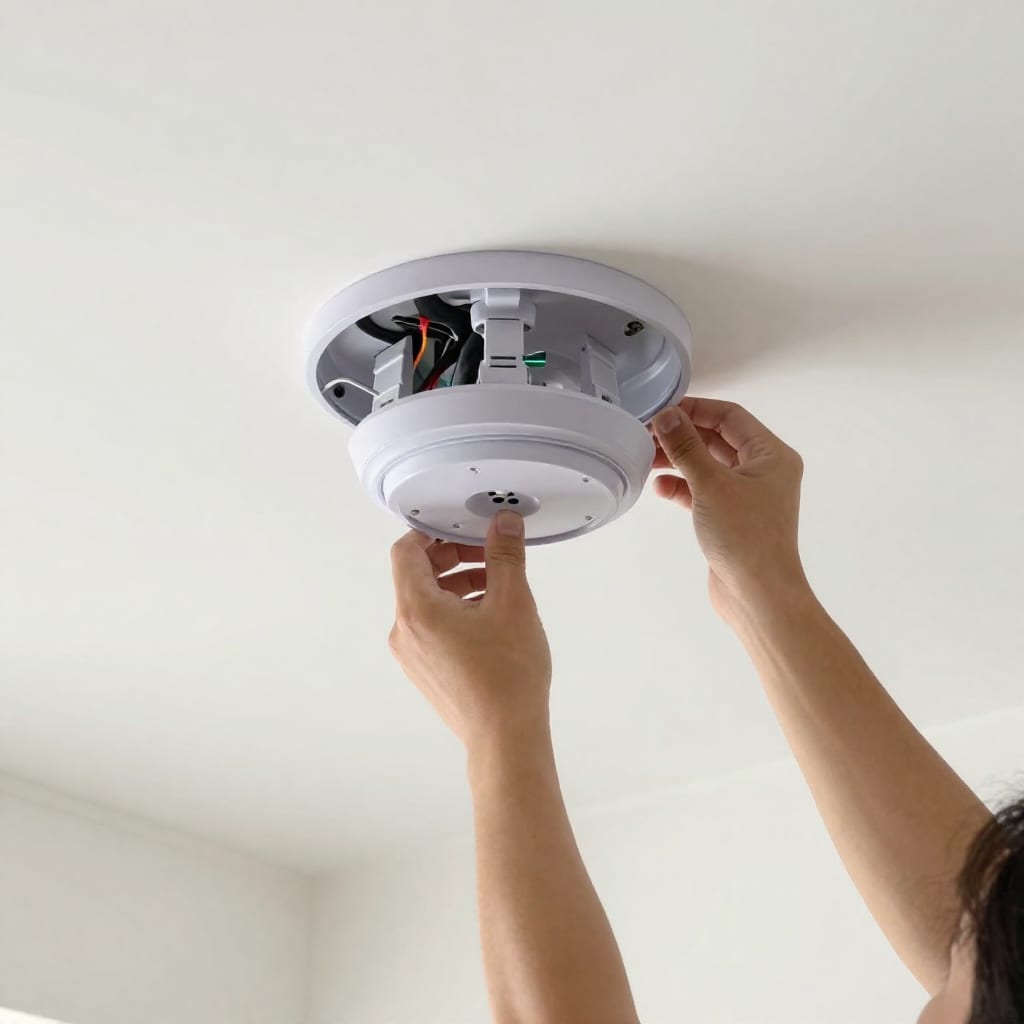
You’ve picked your fan—now let’s get it up. Here’s the process I’ve followed for multiple installations, with the gotchas that tripped me up the first time.
Pre-Installation Checklist
- Turn off power at the breaker. Not just the wall switch—the breaker. Trust me on this.
- Check your electrical box. It must be fan-rated (look for “FAN” stamped on it). If it’s a standard light box, replace it. A fan-rated box costs about $15 and prevents the fan from wobbling or falling.
- Verify the wiring. You need a hot wire (usually black), a neutral (white), a ground (bare or green), and often a second hot wire for the light (usually blue or red). If you only have a single switch, some fans have a workaround, but it’s easier if you have two-wire-plus-neutral.
Installation Steps
- Assemble the fan according to the manual. Most come pre-assembled, but you’ll need to attach blades and the light kit.
- Mount the bracket to the ceiling box. Use the screws provided—they’re usually the right length.
- Connect the wires: black to black, white to white, blue/red to the light wire, ground to ground. Use wire nuts and tug gently to ensure they’re secure.
- Lift the fan into the bracket and secure it. Most have a locking mechanism that clicks into place.
- Restore power and test the fan with the pull chain or remote before pairing.
Pairing with the App and Voice Assistants
Download the manufacturer’s app (Hunter, Modern Forms, etc.). Create an account, then follow the in-app instructions—usually you’ll press a button on the remote or flip a wall switch three times to put the fan in pairing mode. Once connected, you can add it to Alexa or Google Home through the skill or action. For HomeKit, scan the pairing code on the fan or use the Home app. Tip: name your fan something obvious like “Living Room Fan” so voice commands are natural.
Troubleshooting Common Smart Ceiling Fan Issues
Even the best fans hiccup sometimes. Here’s what I’ve seen and how to fix it.
WiFi Connection Keeps Dropping
This is the most common complaint. First, make sure your fan is within range of your router—2.4 GHz networks are more reliable for IoT devices than 5 GHz. If your router broadcasts both bands on the same SSID, separate them or temporarily disable 5 GHz during setup. Some fans have a weak antenna; a WiFi extender near the fan can help.
App Won’t Find the Fan
Reset the fan: turn off the wall switch for 10 seconds, then turn it back on. The fan should flash or beep to indicate it’s in pairing mode. If not, check the manual for a hard reset (usually holding a button on the remote for 5 seconds). Also, ensure your phone’s Bluetooth is on—some fans use Bluetooth for initial pairing.
Light Flickering or Not Responding
Flickering often means the LED driver is incompatible with a dimmer switch. Smart fans are designed to work with their own remote or app, not a wall dimmer. If you have a dimmer switch on the wall, replace it with a standard on/off switch, or leave it at 100% and use the app for dimming. If the light doesn’t turn on at all, check the wire connections—especially the blue wire for the light—and make sure the light kit is properly seated.
Fan Wobbles After Installation
Wobbling is usually due to unbalanced blades. Most fans come with a balancing kit (small weights). Attach a weight to the blade that’s highest when the fan is spinning. Alternatively, check that all blades are tightened to the same torque. If it still wobbles, the ceiling box might not be level—shim it with a washer.
Frequently Asked Questions
Can I use a smart ceiling fan without a neutral wire?
Most smart fans require a neutral wire for the WiFi module to stay powered. A few models have workarounds, like using a battery-powered remote, but they’re rare. Check your wiring before buying; if you don’t have a neutral, consider hiring an electrician to run one or choose a fan that explicitly states it works without one.
Do smart ceiling fans work with my existing light switch?
Yes, but you’ll typically want to leave the wall switch in the “on” position and use the remote, app, or voice commands to control the fan and light. Some fans support smart wall switches (like the Lutron Caséta fan control), but that’s an additional purchase and setup. For most people, the included remote is sufficient.
Which voice assistants work with smart ceiling fans?
Most popular models support Amazon Alexa and Google Assistant. Apple HomeKit is less common but available on premium fans like the Hunter Signal. If you’re using Siri, prioritize a fan with native HomeKit or Thread support to avoid extra hubs.
Are smart ceiling fans more energy efficient than regular ones?
Many smart fans use DC motors, which are up to 70% more efficient than standard AC motors. Plus, scheduling can cut runtime unnecessarily. Over a year, you might save $20–$50 on your electric bill depending on usage. The Energy Star label is a good sign of efficiency.
Can I control a smart ceiling fan without Wi-Fi?
Yes, most still come with a physical remote or pull chain. The app and voice control require an active Wi-Fi network. If your internet goes down, the fan still works via the remote. Some fans also have a manual switch on the unit itself.
Final Takeaway
Choosing the right smart ceiling fan with a light kit comes down to your room size, budget, and smart home ecosystem. For Apple users, the Hunter Signal is the clear winner. For large spaces, the Big Ass Fans Haiku is unmatched. And for the best value, the Hunter Cassius offers nearly everything you need at a fair price. Whichever you pick, take the time to install it properly—check your wiring, use a fan-rated box, and follow the pairing steps. Once it’s up, you’ll wonder how you ever lived without it. Worth bookmarking before your next trip to the hardware store.